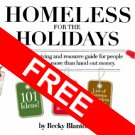
Charity is a God and Community Thing
“Communities that set high standards will compete to the top; communities that set low standards will compete to the bottom.” - Ed McMahon
Seth Godin blogged about selling the benefits of charity today. He said he’s fascinated by people who don’t see the benefits of giving.
He wrote and I totally agree:
I think marketers of causes that do good have a long way to go in selling the public on the core reason to give… don’t give because you get a tote bag, or a prize at the charity auction or even a plaque. The scalable unique selling proposition is that being part of the community is worth more than it costs.
A couple of people wrote to ask me, “What did he mean by that?” Hence this post:
That people who can most afford to give are the least likely people TO give because they don’t *need* the kind of connection to community that most charities are selling. They don’t benefit, or don’t think they really benefit from giving to the causes they’re approached by every day.
The people who give are those who recognize the value of their tribe or community and have a need for it. They tend to be conservatives. Those who give–the middle-class, the working class, the poor, the disenfranchised and those who really don’t have a lot to give, are the ones that also give the most! John Stossel did a great piece on this!
According to Stossel’s report and his interview with Syracuse University professor Arthur Brooks, “When you look at the data it turns out the conservatives give about 30 percent more. And incidentally, conservative-headed families make slightly less money.” Interesting that these are the same people whose *family values* center around community.
Stossel points out that Brooks goes on to say:
- Conservatives are even 18 percent more likely to donate blood.
- The second myth is that people with the most money are the most generous. But while the rich give more in total dollars, low-income people give almost 30 percent more as a share of their income.
- Says Brooks: “The most charitable people in America today are the working poor.”
Why? It’s a God thing:
Brooks says one thing stands out as the biggest predictor of whether someone will be charitable: “their religious participation.” Religious people are more likely to give to charity, and when they give, they give more money — four times as much.
But doesn’t that giving just stay within the religion?
“No,” says Brooks, “Religious Americans are more likely to give to every kind of cause and charity, including explicitly nonreligious charities. Religious people give more blood; religious people give more to homeless people on the street.”
Wow.
I could go on and on. There are dozens of reasons people give, or don’t give to charity, but the two most compelling reasons anyone opens up their checkbook and writes the big one are because of exactly the reason Seth and John noted (COMMUNITY). But, they also do so out of a faith in something greater than themselves.
I donate to my local fire and rescue department and attend every all-you-can-eat event they hold. When I lived out west I bid on the 4-H livestock local kids were selling - usually at 4 to 6 times the market price of the meat like everyone else. I call my local Christian thrift store when I have clothing and books and old furniture to give away. I tithe. Why? Because community and my faith are important to me. I know when I support them, they support me. It’s a mutually beneficial relationship.
Most marketers rely on the pity factors, not the community factor:
- We’re so poor.
- We can’t afford it.
- We need your help.
- Without you it’s not possible.
- Look at the face of these children or this animal - how sad
Do they work? On some people. But not on most - which is why charitable donations have hit an all time historic low. But look closer at the statistics. The people who are still GIVING the MOST are the ones LEAST likely to be able to afford to give! WHY?
Because THEY understand the benefits of community and they believe in something greater than themselves. Can I say this too many times?
Penelope Trunk pointed this out in an awesome blog post about her son selling his pig at a recent 4-H auction. I read it because after writing about these 4-H sales for years, and bidding on animals myself, I wanted to hear a parent’s perspective. She writes:
“San Diego County has 3 million people and it raises $400,000 at their 4H auction at the county fair. Lafayette County raises $100,000 from a population of 15,000.”
What’s the key word here? COMMUNITY.
In a related post Seth says:
The goal of a non-profit seeking money needs to be to create an environment in which the community congratulates itself on overpaying.
It doesn’t matter if your community is rural farmers who struggle to put food on their own tables, or billionaires whose incomes rival that of a third world country and couldn’t spend all their millions if they had to to save their own lives. Until you understand their COMMUNITY (Tribe) is, and what matters to it, you won’t ever raise the money you want or need.
For instance, the TED community values ideas and conversations about ideas. I was told the average TED Global attendee pays from $7,500 to $15,000 for the WEEK LONG attendance at TED. For what? For blue sky and the intellectual experience of a lifetime essentially. If I had the money I’d spend it every year the value is that incredible and I’m a member of the idea community. When I was there I met people who sold their homes, cars and gave up jobs to attend. I know of three people who told me they would return home and be homeless, but that it was worth selling everything to attend TED. I agree. It was that amazing. Those are the people who see and value what ideas can do for community.
So, the value in the TED community is in the ideas, but it’s also in networking with others who value and see the value in ideas as strongly as you do. Some members of the TED COMMUNITY will give because they see that value. Do you belong to a community that’s so critical to you that you’d sell everything and even become homeless to promote and support it? There are many people who do. Find them.
If you’re trying to market a charity and convince people to give to your cause don’t waste time or resources on those who aren’t part of a community, or related to that community. They’re not buying and they’re not going to buy.
Identify who the communities are and how much your cause matters to them and why. Realize too there can be more than one community around the same issue/need/charity. Mark Horvath spends his time talking to the homeless and raising awareness among the general public about how hard, desperate and demoralizing homelessness is. He touches a lot of people with his methods and his message. He’s raised money, gotten housing for people and touched thousands of lives. He knows his community.
My community and my message about homelessness is different from Marks - not better or worse, but different. My message is, “It happens to journalists, bankers, lawyers, doctors, engineers and even millionaires. It can happen to you. It happened to me. When it happens to you, or someone you know, or to a family member this is why it will suck for you, and this is why it sucks for others. This is not a moral issue. It’s a financial one.”
My message doesn’t resonate with most of Mark’s community and his message doesn’t touch very many of mine. That’s not good or bad. It just is - chocolate or vanilla. It’s just different. The reason that most of the people I’ve heard from resonate with my TED talk is not because they felt sorry for me, but because they’re in my community. They get it that we’re all a paycheck, a job loss, a serious illness away from homelessness and that it could happen to them. We’re a community of struggling boomers, creatives, writers, teenagers and professionals.
When they ask me what they can do I tell them to get involved locally, through their church, meals on wheels, or simply by donating an extra $1 to $10 a month on their utility bills. (Studies show that when families can’t pay their utility bills they’re more likely to become homeless soon afterwards. It cost more to rehouse someone than to keep them in the home/apartment where they already are. Your $10 a month is better spent helping pay someone’s utility bill than in buying someone a meal. Even better if you can do both, but given the choice between keeping a family of four in their home, or feeding a single homeless person understand you’re keeping four people off the street and out of that situation.
Mark’s community is the homeless man/woman on the street. Mine are often more likely to be those people struggling to stay off the street. Both are legitimate charities. There is no one is better than the other. One may feel more urgent, and which community you gravitate towards is up to you and depends on what matters to you. Don’t try to sell those who don’t feel the same on the urgency though - not unless you can identify the community they belong to that is affected.)
Anyway, my point being is that if you’re with a charity and you’re going after funds, you won’t succeed until you identify the community that cares. Do that and the hard work is half over.
No more rambling. I just felt compelled to point out that ALL giving, ALL charity is ALWAYS ALL ABOUT COMMUNITY. Understand that and you understand how to market to them.